
Marketing for Tradies: What Brings In Jobs in Melbourne
If you run a trade business in Melbourne's west, you're not short of tradie marketing options. You're short of a clear order to do them in.
A typical week means paying for leads on a platform, boosting a Facebook post, leaving an old website untouched and hoping the phone rings. Some jobs come in. The hard part is knowing what actually brought them in.
What digital marketing works best for tradies in Melbourne?
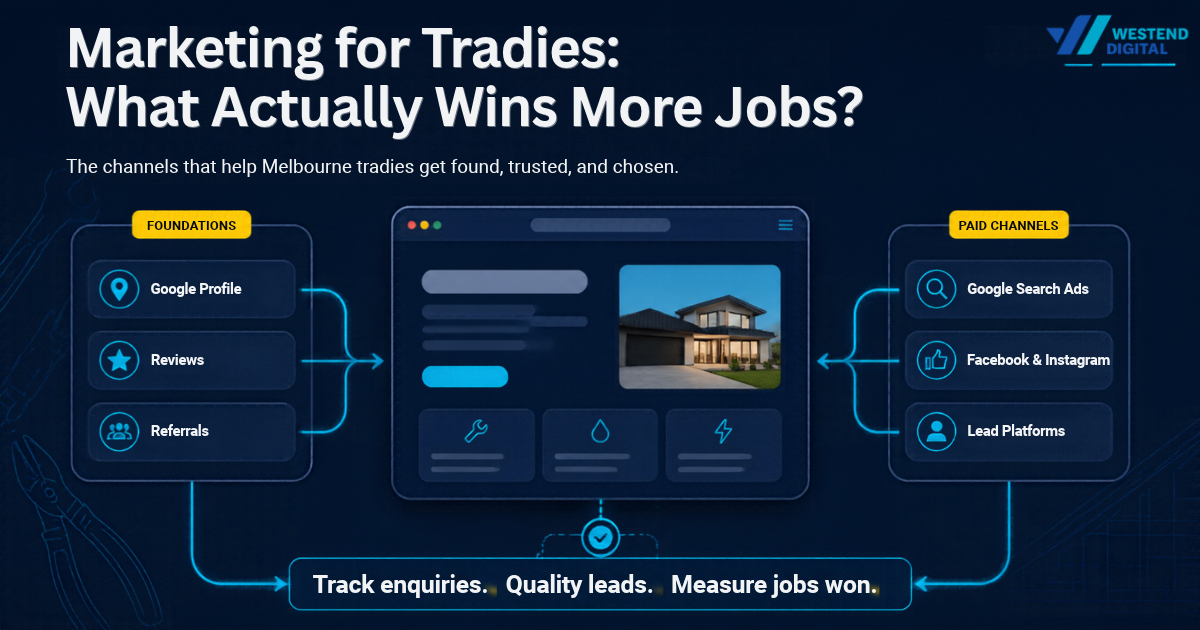
For most Melbourne tradies, start with an accurate Google Business Profile, genuine customer reviews and a reliable referral network. Google Search Ads capture demand for urgent jobs. Facebook and Instagram suit planned work, such as renovations, where people need time to compare options. The right mix depends on your trade, service area and budget. Track enquiries and booked jobs before increasing your spend.
Digital marketing for tradies has the same two jobs as word of mouth: help nearby customers find you, then give them enough confidence to choose you over the other names on the screen. This guide explains where we'd start, what each channel can do, and which shortcuts to avoid.
Start with the kind of jobs you want
A burst pipe and a kitchen renovation don't follow the same buying journey. That matters more than chasing whichever advertising platform is popular this month.
• Urgent work: a blocked drain, loss of power, or emergency repair. Customers often search immediately, compare a few nearby options, and call someone who looks credible and answers.
• Planned work: a deck, bathroom renovation or switchboard upgrade. Customers have more time to compare photos, reviews, quotes, and recommendations.
These are practical patterns, not hard rules. A homeowner can discover a plumber through a referral and still check Google before calling. The point is to choose channels that match how your customers make decisions.
For example, a hypothetical emergency plumber in Werribee may get more value from appearing in local search and answering calls quickly. A kitchen renovator in Point Cook may benefit more from project photos, referrals and a website that explains their work. Both need to know which enquiries become paying jobs.
A word on tradie marketing statistics. Search for tradie marketing advice, and you'll find confident claims that nine in ten tradies win most of their work through Google reviews. When we traced figures like these, most led back to software vendors or lead platforms with no published sample size or method. We couldn't find a recent government survey of how Australians choose a tradesperson. So this guide relies on what Google says about its own results and what Australian regulators publish, not survey headlines.
How Google decides which tradies appear in local results
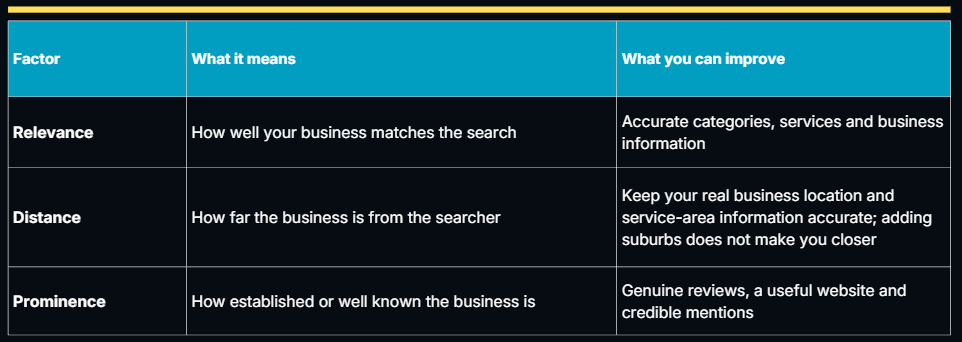
Google says local results are mainly influenced by relevance, distance and prominence. These are useful foundations for local SEO, not a promise of a particular ranking.
Where we would put your marketing effort first
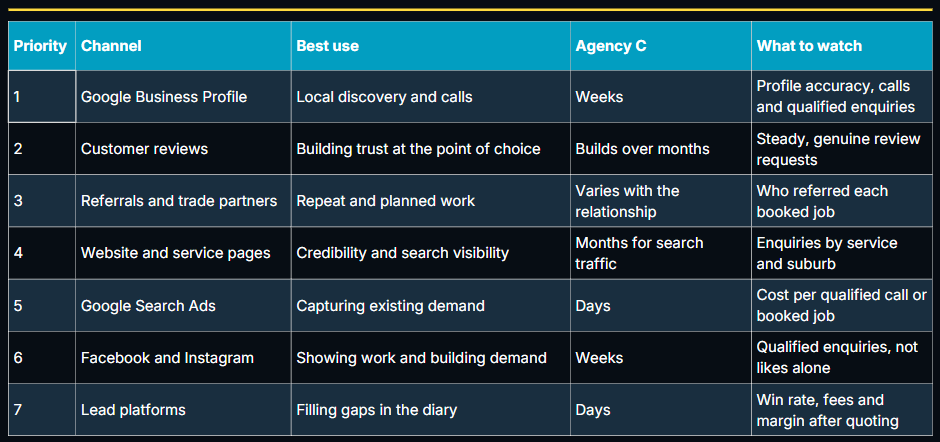
This is a starting order for a typical small trade business, not a universal ranking. If you already have a steady referral pipeline or need urgent work this week, the order may change.
1. Get your Google Business Profile right
For urgent jobs, your Google profile is your shopfront. It's what appears when someone searches “electrician near me” or “plumber Werribee”.
Use the right primary category, list the services you actually provide, keep your hours and contact details accurate, and upload photos of real jobs and your team. Set up your service area truthfully. Our guide to local SEO and Google Business Profile for tradies goes into the setup in more detail.
2. Ask for reviews consistently, not selectively
Reviews help customers decide whether to trust you, and Google says review count and positive ratings can influence local rankings. Build a simple habit: after completing a job, send every eligible customer your review link and invite honest feedback. Don't offer discounts or gifts in return, and don't ask only the people you expect to leave five stars.
Reply to positive and negative reviews professionally. A thoughtful response to a complaint can show future customers how you handle problems.
Google explains these restrictions in its Maps review policy. Australian Consumer Law also prohibits misleading conduct around reviews.
3. Treat referrals like a marketing channel
Builders need electricians and plumbers. Property managers need dependable maintenance contractors. Renovation companies often need specialist trades. These relationships are especially valuable for planned, higher-value jobs.
Keep track of who sends you work, thank them and stay in touch. Ask every new customer how they heard about you. You don't need complicated software to start, just a record you actually maintain.
4. Build a useful website, not just a pretty one
An urgent customer usually calls straight from Google. Someone planning a renovation is more likely to look at your past work and check whether you're the right fit.
Give each main service a clear page. Show real project photos, the areas you cover, relevant licence or registration details and a tap-to-call number. Explain what the job involves and how to request a quote. Avoid copying the same suburb paragraph onto dozens of near-identical pages.
If you are using an off-the-shelf site or AI builder, our article on why AI-built websites can look alike explains why original content and real project evidence still matter.
5. Use Google Search Ads when people are ready to call
Google Search Ads put your business in front of someone actively searching for your trade. They can also burn through a small budget if the targeting, landing page and call handling are poor.
A Melbourne-wide campaign sending every click to a generic homepage is rarely where we'd start for a local operator. Focus on the services and locations you can actually serve, send people to a relevant page and measure which calls turn into real opportunities.
Before increasing spend, read our six questions to ask about paid ads and understand the difference between ad budget and management fees
6. Use Facebook and Instagram to show the work
Someone dealing with a burst pipe is more likely to search for immediate help than browse Instagram. But people planning a renovation do notice a finished bathroom, a short walkthrough or a helpful explanation of what affects the quote.
For planned jobs, real before-and-after photos, short videos and answers to customer questions build familiarity. If you run paid Meta campaigns, judge them by qualified enquiries and booked work, not reach or likes alone.
The broader channel choice is similar for other local services. Our Google Ads versus Meta Ads comparison explains the difference between capturing existing demand and building future demand.
7. Use lead platforms as a top-up, not your only source
Platforms such as hipages and ServiceSeeking sell tradie leads, and they help a new business find work before it has many reviews or referrals. The catch is that you're usually competing with other tradies for the same enquiry, and the fee is only one part of the cost.
Track how many leads become quotes, how many quotes become jobs and what margin remains after the platform fee and your quoting time. If a platform wins you a good customer, do the job well and build a direct relationship for future work.
How to tell which marketing is actually bringing in jobs
A cheap lead is not automatically a profitable job. A channel that sends ten enquiries and wins one low-margin job is worth less than one that sends three enquiries and wins two good jobs.
Start with five numbers for each channel:
• Enquiries received
• Qualified enquiries
• Quotes sent
• Jobs won
• Revenue or gross profit from those jobs
Ask “How did you find us?” when someone first calls, and use call or form tracking where appropriate. Treat customer answers as helpful but imperfect, because people may see more than one channel before contacting you.
For paid marketing, look at cost per booked job as well as cost per lead. If you spent $600 and won three jobs, that's $200 in advertising spend per won job, before management fees and other costs. Whether that's good depends on the profit those jobs bring in. This is an illustrative calculation, not a client result.
Marketing rules Victorian tradies should know
There are some shortcuts you should avoid. This is general marketing information, not legal advice. Requirements vary by trade and the type of work advertised.
Reviews must be genuine
Don't buy reviews, offer incentives for Google reviews or filter out customers who might leave negative feedback. Google's policy prohibits those practices. The ACCC also warns that fake, manipulated or misleading reviews can breach Australian Consumer Law.
Sources: Google Maps review policy and ACCC guidance on managing online reviews
Check licence and registration requirements before advertising
In Victoria, registered electrical contractors must display their REC number in advertisements, notices or statements offering electrical contracting work. Domestic builders must include the name and registration number of the responsible building practitioner on advertising and written offers for domestic building work, under sections 169H and 169I of the Building Act 1993. The Victorian Building Authority, which published this guidance, now trades as the Building and Plumbing Commission. Plumbers and other trades have their own rules, so confirm the requirements for your work before publishing ads, signage or website claims.
Check Energy Safe Victoria and the Victorian building regulator guidance for the relevant obligations.
A practical checklist for the next 90 days
This week
• Check your Google Business Profile category, services, hours and contact details.
• Upload recent, genuine job photos with permission where needed.
• Make sure customers can call or request a quote easily on mobile.
• Create a consistent, non-incentivised review request message.
• Start recording where each enquiry came from and whether it became a job.
Over the next one to three months
• Build or improve a service page for each major job type.
• Contact the builders, property managers and other trades who already refer work.
• Reply to existing reviews and keep asking all eligible customers for honest feedback.
• If you need more enquiries, test one paid channel with clear tracking and enough budget to learn.
• Review won jobs and margins, not just clicks, calls or platform-reported leads.
The bottom line
For most Melbourne tradies, the basics still do the heavy lifting: a Google profile people can trust, real reviews, referrals and a website that shows the work. Paid ads can help, but they work best when you know which jobs you want and can track what happens after the enquiry.
If you're an emergency trade, start by being easy to find and easy to call. If your work is planned and higher-value, give people reasons to choose you before they're ready for a quote.
Not sure which channels are actually bringing jobs into your business? Westend Digital works with businesses in Melbourne's west and across Melbourne. We can review your current marketing, identify where enquiries are coming from and help you decide where to focus your next dollar. We don't use lock-in contracts, and we'll be upfront about the time each channel needs to collect meaningful data. See how we work with trade businesses.
Frequently asked questions
What is the best marketing for tradies on a small budget?
Start with a complete Google Business Profile, genuine customer reviews and referral relationships. These take time rather than ad spend. Add a paid channel once you can measure which enquiries become jobs.
Should tradies use Google Ads or Facebook ads?
Google Search Ads make more sense for urgent, high-intent searches. Facebook and Instagram work better for planned work where people want to see past projects before they enquire. The right choice depends on your trade and customer journey.
Are lead platforms such as hipages worth it?
They can help fill gaps, especially for newer businesses, but compare the fee, time spent quoting, win rate and profit from the jobs you actually secure.
Can I offer a discount in exchange for a Google review?
No. Google's policy prohibits incentives for reviews, whether positive or negative. Ask customers for genuine feedback without rewards or pressure.
Do I need a licence number on my ads in Victoria?
Some trades do. Registered electrical contractors must include their REC number in advertising, and domestic builders must include their name and registration number. Check the rules for your specific trade with the relevant Victorian regulator.
How long does marketing for tradies take to work?
Paid ads can produce enquiries within days, but results are not guaranteed. Reviews, referrals and organic search visibility usually build over time. Judge performance using qualified enquiries and jobs won over a meaningful period.
Westend Digital is a Melbourne-based digital marketing agency working with small and medium-sized businesses across trades, healthcare, professional services, and hospitality. If you are setting a budget for your next ad campaign and want a second opinion before you commit, reply to The Westend Brief or visit westenddigital.com.au.