
PLUMBING BUSINESS MARKETING
Facebook Ads for Plumbers That Keep the Phone Ringing Between Jobs
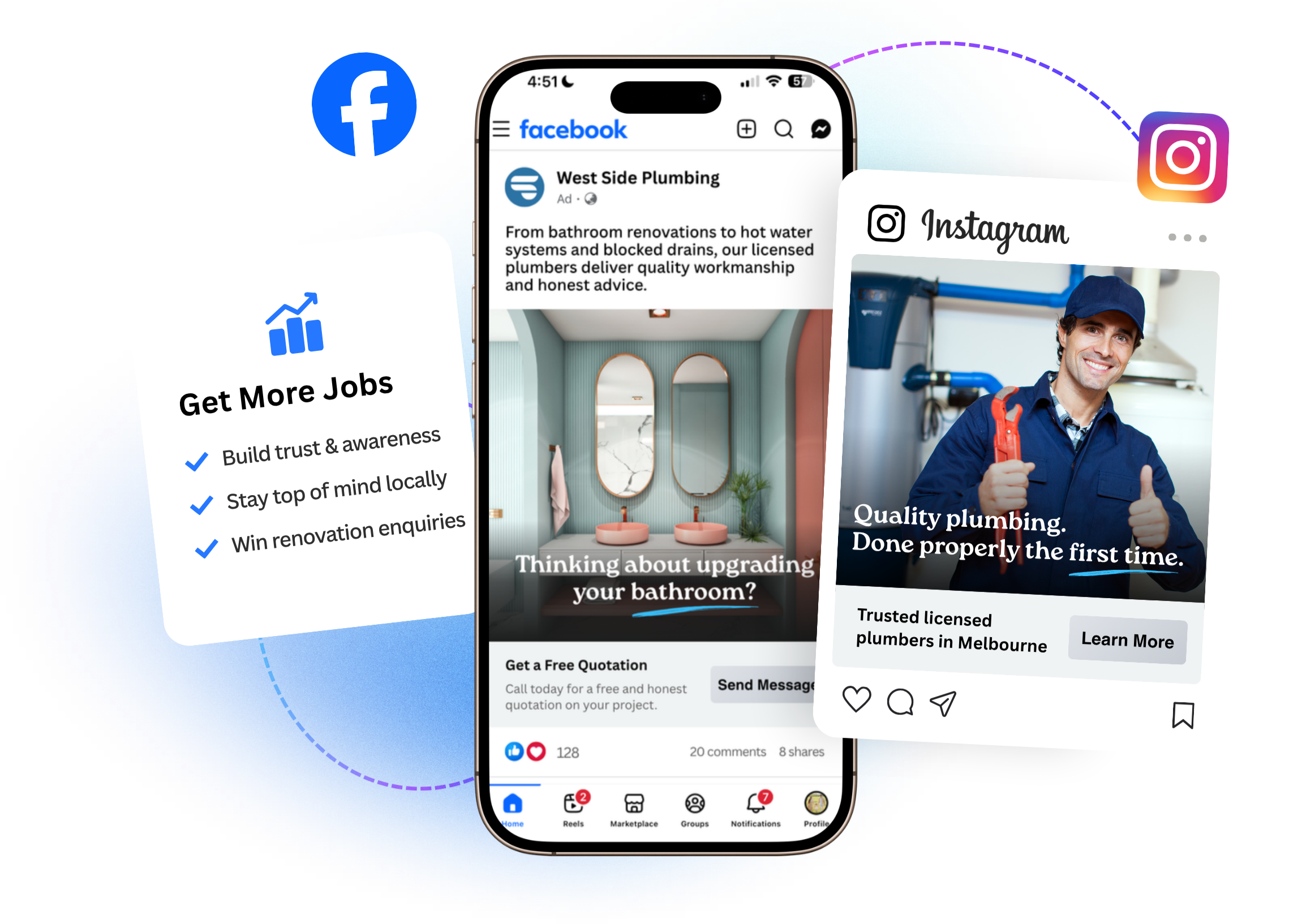
Nobody scrolls Instagram during a burst pipe, but almost every homeowner planning a bathroom renovation, a hot water system replacement, or general plumbing work checks Facebook and Instagram before they check anything else. Well-targeted Facebook ads and Instagram ads for plumbers put a plumbing business in front of exactly those homeowners, build trust with real photos and video of completed work, and bring back anyone who has already visited the website without booking.
No lock-in contracts
No jargon-filled reports
90% of Instagram users follow at least one business account
Instagram for Business, cited consistently across 2025-2026 social media research
Verified Industry Benchmarks
Real data to frame your budget expectations
$0.70
Average cost per click across all industries for Facebook traffic campaigns
WordStream, 2025 Facebook Ads Benchmarks (554 US campaigns)
$2.23
Average CPC for Home & Home Improvement*, the category covering plumbing services, on Facebook Lead Ads
WordStream, 2025 Facebook Ads Benchmarks
7.72%
Average conversion rate across all industries for Facebook Lead Ads
WordStream, 2025 Facebook Ads Benchmarks
*Service-industry cost per click for Facebook and Instagram ads for trades and home services in Australia typically ranges from $1.00 to $2.50 AUD, noticeably lower than the equivalent Google Ads cost per click for the same businesses.
Perth Digital Edge, 2026 Australian market data
Where Facebook and Instagram Fit in How Plumbing Customers Decide
Meta Ads works on a different logic to search, and a campaign that tries to copy Google Ads on Facebook and Instagram tends to underperform.
Passive discovery and retargeting
Nobody is actively shopping for a plumber while scrolling their feed, so Meta Ads earns its place by putting a plumbing business in front of the right local homeowners before they need one, then following up with a targeted ad for anyone who has already visited the website without calling or booking.
Planned plumbing work and renovations
Hot water system replacements, bathroom and kitchen renovations, and similar considered jobs are exactly what Facebook and Instagram's visual formats are built for. Before-and-after photos, short video walkthroughs of completed jobs, and genuine customer reviews let a homeowner build trust with a business over several scrolls, well before they ever pick up the phone or request a quote.
Meta Ads is not built for the same in-the-moment intent as Google Ads, since nobody opens Instagram in the middle of a burst pipe. That is exactly why the two channels work best together rather than as substitutes for each other.
Meta Ads for Planned Plumbing Work
Meta Ads are best suited to planned plumbing services such as bathroom renovations, hot water system replacements and other higher-consideration upgrades. Educational content can help homeowners understand their options, compare systems and know when it may be time to repair or replace existing plumbing.
Seasonal campaigns can also promote relevant offers, such as hot water checks, winter plumbing preparation or renovation-focused promotions. Emergency plumbing demand is better captured through Google Search, where customers are actively looking for immediate help.
Why Meta Ads Works for Plumbing Businesses
Visual proof for planned and considered jobs
Before-and-after photos, short video of completed installations, and genuine customer reviews are exactly the kind of content Facebook and Instagram are built to show. This is where Meta Ads earns trust for higher-consideration work such as bathroom renovations and hot water system replacements, often before a homeowner has searched for anything at all.
Retargeting website visitors who did not convert
A Meta Pixel or Conversions API event tracks everyone who visits a plumbing business's website without booking, so a business can serve a follow-up ad to exactly that audience rather than starting again with a completely cold one.
Working alongside Google Ads and the Google Business Profile
Meta Ads and Google Ads solve different problems. Google Ads captures a search happening right now, while Meta Ads builds the familiarity and trust that make a homeowner choose a business when they do eventually search or ask around for a quote.
Common Challenges Plumbing Businesses Face With Meta Ads
Most plumbing businesses that have tried Facebook or Instagram ads before have run into one or more of these problems:
Boosting posts from the Facebook page instead of running a properly structured campaign in Ads Manager
No Meta Pixel or Conversions API set up, meaning there is no way to retarget people who already visited the website
Generic stock photography instead of real before-and-after photos or video of completed jobs
Lock-in contracts with reporting that does not explain what is actually happening
Westend Digital has not yet worked with a plumbing business client directly, since the agency is still early in its client base. What can be offered instead is a transparent process, built around how this trade's customers actually discover and evaluate a business on social media, with full visibility into what is working and what is not.
Our Process
Discover
Audience mapping, competitor audit, and goal alignment for your service area.
Strategy
Channel selection, campaign structure, and KPI framework.
Execute
Campaigns live, creative and copy built in-house.
Report
Live dashboards and plain-English reporting, not narratives.
Refine
Kill what does not work, scale what does.
What's Included
Campaign build and ongoing management across Facebook and Instagram
Lead form and conversion tracking setup
Creative direction for on-site video content (production approach to be confirmed based on service scope)
Ad copy and landing pages built around electrical services, not generic templates
Monthly reporting in plain English and No lock-in contracts
FAQs
Frequently Asked Questions
How much should a plumber spend on Facebook and Instagram ads per month?
Cost per click for trades and home services on Facebook and Instagram in Australia typically falls between $1.00 and $2.50 (Perth Digital Edge, 2026), with cost per lead generally landing between $20 and $55 depending on the offer and creative. Westend Digital sets a starting budget based on service area and job value, then adjusts it once real campaign data comes in.
How long does it take to see results from Meta Ads for a plumbing business?
Meta Ads generally takes longer to show results than Google Ads, since it is building awareness and trust rather than capturing an existing search. Most campaigns need three to four weeks of delivery and creative testing before performance stabilises, with steady improvement over the first one to two months.
Are Facebook and Instagram ads effective for emergency plumbing call-outs?
Not really. Someone with a burst pipe is searching Google, not scrolling Instagram. Meta Ads is better suited to planned work such as renovations and replacements, and to staying visible in a local area so a business is already familiar when an emergency does happen. Google Ads and call-only campaigns remain the better channel for genuine emergencies.
Facebook Ads or Instagram Ads: which is better for a plumber?
Most plumbing campaigns run across both platforms from a single Meta Ads account, since Facebook and Instagram share the same ads manager, targeting, and often the same creative. Facebook tends to reach an older homeowner audience more likely to be planning renovations, while Instagram, particularly Reels, tends to perform well for the before-and-after and video content that builds trust in a trade.
What is the difference between Meta Ads and Google Ads for a plumber?
Google Ads places a business in front of someone actively searching for a plumber right now. Meta Ads builds visibility and trust with homeowners before they search, through visual content and local targeting, and brings back website visitors who did not convert the first time. Most plumbing businesses get the best return from running both together.
Can Facebook and Instagram ads target specific suburbs in Melbourne's west?
Yes. Campaigns can be built around the specific suburbs a plumbing business actually services, rather than spreading budget across an entire metro area.
What does the Meta Pixel do for my plumbing business?
The Meta Pixel is a small piece of code on a website that tracks visitors and lets a campaign follow up with people who looked at a service or contact page without booking, and helps Meta's system find more people who behave like a business's existing customers.