Electrical Business Marketing
Meta Ads for Electricians That Turn Local Attention Into Enquiries
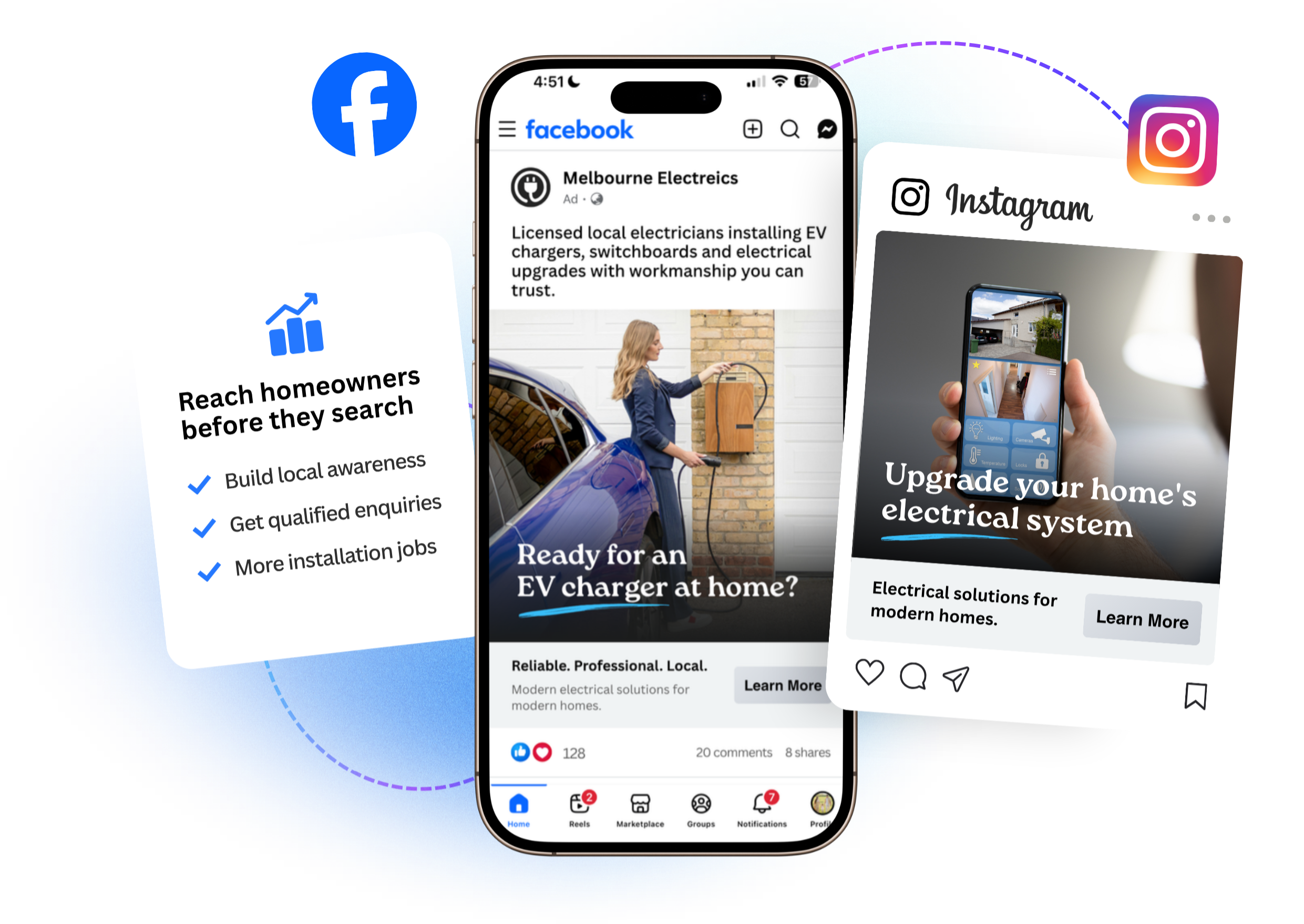
Not every customer is searching yet. Most homeowners who need a switchboard upgrade, a rewire, or an EV charger installed have not typed anything into Google. They are scrolling. Westend Digital builds Facebook and Instagram campaigns using real jobsite content and local targeting that turn that attention into enquiries, without needing the customer to search first.
No lock-in contracts
No jargon-filled reports
97% of consumers read online reviews before choosing a local business
BrightLocal, Local Consumer Review Survey 2026
Verified Industry Benchmarks
Real data to frame your budget expectations
$43.10
Across all industries, Australian advertisers paid an average Facebook Ads cost per lead of approximately $43.10 AUD over a recent 13-month window, close to the $41.00 global average
(Superads, aggregated from over AUD $3 billion in ad spend data)
$0.98
Australia's median Facebook Ads cost per click averaged approximately $0.98 AUD over a recent 12-month window (
WordStream, 2026 Meta Benchmarks
$70.11
Facebook Lead Ads carried a global average cost per lead of $27.66 in 2025, notably lower than the $70.11 average cost per lead for Google Ads, giving Facebook a cost advantage specifically for lead generation objectives
(WordStream, 2025 Facebook Ads Benchmarks
How Facebook Ads Differ From Google Ads for Electricians
Google Ads and Facebook Ads solve two different problems, and a campaign that treats them the same way tends to underperform on both
Google Ads: capturing existing demand
Someone already knows they need an electrician and is actively searching. The job of the campaign is simply to be present at that exact moment.
Facebook Ads: creating demand before the search starts
Most people who see a Facebook or Instagram ad were not looking for an electrician when they saw it. Meta lets the right offer reach the right local audience before that person starts comparing quotes, which is especially useful for high-value upgrades and visually clear jobs like switchboards and EV chargers. The best campaigns do not feel like ads. They feel like proof: a real electrician on-site, explaining the work, showing the result, and making the business feel local and trustworthy.
This difference changes the objective, the creative, the funnel, and what a realistic result looks like. It is the reason this page exists as a separate template from the Google Ads version, not a copy of it.
Why Meta Ads Works for Electrical Businesses
Demand generation before the search happens
Most homeowners aren't typing "panel upgrade" or "EV charger install" into Google until they already know they need one. Meta ads put wrapped-truck photos, generator offers, and EV charger installs in front of local homeowners while they scroll, creating the demand that search later captures.
Real job-site video beats stock photos
Electrician cost per lead on Meta runs $25–$60, with CPC around $2–$6, but creative decides where you land in that range. One agency case cut cost per lead from $85 to $31 simply by swapping stock imagery for real job-site footage and tightening the geo-targeting radius.
Working alongside Google Search and Local Services Ads
Meta isn't competing with Google, it's the assist. Retargeting site visitors and running Facebook alongside search ads lowers blended cost per lead by 3–29% through audience reinforcement, building familiarity before someone searches or calls direct.
Meta Ads for Planned Electrical Work
Meta Ads work best for planned electrical projects rather than urgent call-outs. Services such as switchboard upgrades, lighting projects, EV charger installation and rewiring give customers time to compare providers, view completed work and build trust before requesting a quote. Short videos, project photos and local electrician content can help demonstrate workmanship and familiarity with the area.
Emergency electrical demand is different. When someone has a power outage, burning smell or electrical fault, they are far more likely to search Google and call immediately. For that reason, Meta should support planned-project demand and brand trust, while Google Search captures urgent, high-intent enquiries.
Common Challenges Electrical Businesses Face While Running Ads
Most electrical businesses that have tried Facebook Ads before have run into one or more of these problems:
Generic "we do all electrical work" messaging
No real on-site footage
Slow follow-up
Weak or vague offers
Treating Facebook like Google Ads and expecting immediate high-intent demand instead of building trust first
Westend Digital has not yet worked with an electrical business client directly, since the agency is still early in its client base. What can be offered instead is a transparent process, built around how this trade's customers actually search and buy, with full visibility into what is working and what is not.
Our Process
Discover
Audience mapping, competitor audit, and goal alignment for your service area.
Strategy
Channel selection, campaign structure, and KPI framework.
Execute
Campaigns live, creative and copy built in-house.
Report
Live dashboards and plain-English reporting, not narratives.
Refine
Kill what does not work, scale what does.
What's Included
Campaign build and ongoing management across Facebook and Instagram
Lead form and conversion tracking setup
Creative direction for on-site video content (production approach to be confirmed based on service scope)
Ad copy and landing pages built around electrical services, not generic templates
Monthly reporting in plain English and No lock-in contracts
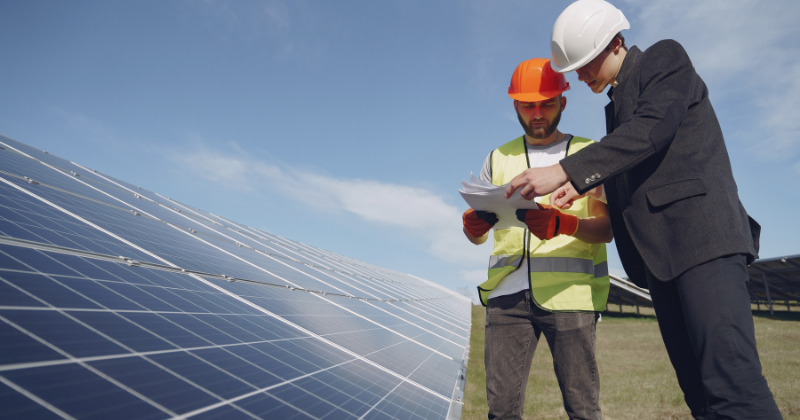
Meta Ads for Planned Electrical Projects
Meta Ads are best used for planned electrical work such as switchboard upgrades, EV charger installation, lighting upgrades and rewiring. Project photos, short videos and locally focused creative can help build trust before a customer requests a quote.
Emergency electrical work is better suited to Google Search, where customers are actively looking for immediate help. Meta should focus on planned projects and brand familiarity rather than urgent call-out demand.
FAQs
Frequently Asked Questions
How much do Facebook ads cost for electricians?
Costs vary by suburb, competition, offer, and creative quality. Across all industries, Australian advertisers have recently paid an average cost per lead of around $43 AUD on Facebook, with cost per click averaging under $1 AUD (Superads, 2025 to 2026 data). These are all-industry figures rather than electrician-specific ones, so treat them as a directional planning reference, not a guarantee.
Do Facebook ads work for electricians?
Yes, especially when the campaign uses local proof, short jobsite video, and a service-specific offer such as emergency work, switchboard upgrades, or EV charger installation. Facebook does not capture people actively searching right now the way Google Ads does. It builds awareness and demand before that search happens.
What kind of creative works best?
Real on-site video usually performs best, especially when the electrician explains the job in plain language while the footage shows the work and the result. Captions should be burned in, since most people watch with the sound off.
Is Facebook Ads better than Google Ads for electricians?
They do different jobs. Google Ads captures existing intent from someone already searching. Facebook Ads creates attention and trust earlier in the decision process, before that search happens.
Do you create the content too?
Yes. Campaigns can be built around the specific suburbs an electrical business actually services, rather than spreading budget across an entire metro area.
Can Facebook ads generate emergency call-outs?
Not as reliably as Google Ads. Someone with no power right now is searching, not scrolling. Facebook is better suited to planned electrical work and to building recognition in a service area ahead of when an emergency happens.
Do you require lock-in contracts?
No. Westend Digital does not lock clients into long-term contracts. Campaigns are reviewed and reported on regularly, so the decision to continue is based on results.